
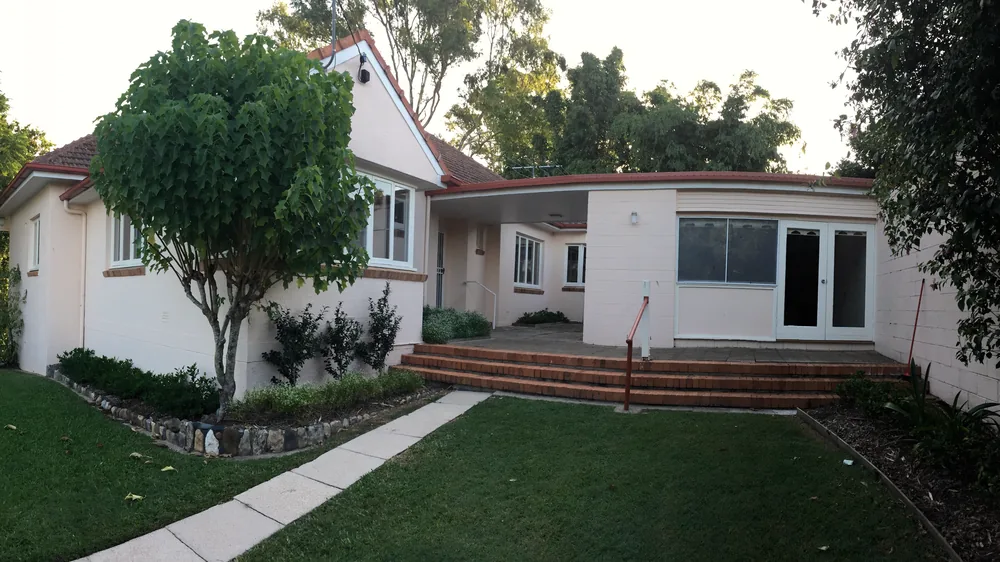
Plenty of Queensland owners move out of their home and keep it as a rental. When the property sells, two rules decide most of the capital gains tax answer. The six-year rule decides how much of the gain stays exempt. Where part of the gain is taxable, the home first used to produce income rule decides what the gain is measured from, and that starting figure is the market value of the property on the day it was first used to produce income, which can be the day it was first made available for rent.
The second rule is where a valuer comes in. The ATO states that you must get a market valuation of your home when you first start using it for rental or business, if that was after 20 August 1996. Where none was obtained at the time, the value at that date has to be established retrospectively.
The main residence exemption in brief
A home that was your main residence for the whole time you owned it is generally exempt from CGT, provided you are an Australian resident. The exemption is reduced where the home produced income, for example where it was rented out in whole or in part or where part of it was set aside as a place of business, and where it was not your main residence for part of the time you owned it. In those cases a partial exemption applies, worked out on days and, where only part of the home earned income, on floor area. The rules sit in Subdivision 118-B of the Income Tax Assessment Act 1997.
The six-year rule
A property usually stops being your main residence when you stop living in it. Section 118-145 lets you choose to keep treating it as your main residence after you move out:
- Rented or made available for rent. For up to six years in each period of absence.
- Not used to produce income. Indefinitely, for example where it sits vacant or a family member lives there rent free.
The limits matter as much as the rule. While the choice applies you cannot treat any other property as your main residence, apart from up to six months when moving house. The six years is a total within one absence, so rental periods broken by vacancy are added together. A fresh six years starts only after you move back in. The choice also cannot cover a part of the home that was already producing income before you moved out. If a quarter of the house was a consulting room while you lived there, that quarter stays taxable throughout.
The choice is made when the tax return for the year of the sale is prepared, and the sale is reported in the year the contract was signed, not the year it settled. You can also end the choice early, for example on the day you buy a new home, so the new home can be the main residence from then on.
Selling within the six years
If the home is sold while the rental absence is still within six years, you make the choice, and no part of the home produced income before you moved out, the gain is generally fully exempt. The first use to produce income rule does not apply where the property is fully exempt, so no valuation at the first rental date is needed for that purpose. Keep records of the dates all the same.
Beyond six years: the first income date
If the home is rented for more than six years in one absence, the period beyond six years is taxable. Section 118-192 then changes the starting point. The ATO lists the conditions: you acquired the property on or after 20 September 1985, first used it to produce income after 20 August 1996, and would have been fully exempt had you sold it just before that day. Where they are met, you are treated as having acquired it on the date it was first used to produce income, at its market value on that date. The ATO treats renting the home out or making it available for rent as using it to produce income.
The same reset applies to an owner who rents the old house and does not make the six-year choice at all. In the ATO’s example an owner bought for $450,000 in 2014, began renting the house in August 2025 when it was worth $650,000, and sold in June 2026 for $696,000. The gain was measured from $650,000.
The reset is not optional. The whole calculation rests on one figure, the market value on the first income date. That is a retrospective valuation at the first income date, usually prepared years after the date itself.
The partial exemption arithmetic
The ATO sets out the method in steps. Work out the gain from the market value at the first income date, plus allowable costs since then. If only part of the home produced income, multiply by the share of floor area used for that purpose. Then multiply by the number of taxable days divided by the number of days from the first income date to the sale. Where the whole home was rented, the floor area step drops out.
In the ATO’s floor area example, a tenant had one bedroom, 20 per cent of the house, and shared living areas making up another 30 per cent, half of which was attributed to the tenant. The rented share was 35 per cent.
A worked example with days
These figures are illustrative. This example counts both the first and the last day of each period and runs the six years to the same date six years later, as in the ATO’s worked example:
- Purchase and occupation. A house in Brisbane, bought and lived in as the main residence from 2014.
- First income date. The owner moves interstate and the house is first made available for rent on 1 March 2017. A retrospective valuation puts the market value at that date at $600,000.
- Six-year period. 1 March 2017 to 1 March 2023, 2,192 days, covered by the choice. No other property is treated as the main residence in that time.
- Taxable period. 2 March 2023 to 1 March 2026, 1,096 days.
- Days from the first income date. 1 March 2017 to 1 March 2026, 3,288 days.
- Sale. The sale settles on 1 March 2026 for $900,000. Selling costs are left out to keep the arithmetic plain.
The gain from the first income date is $900,000 less $600,000, or $300,000. The taxable share is 1,096 divided by 3,288, which is one third, giving an assessable gain of $100,000 before any discount. Because the sale happens before 1 July 2027, an Australian resident individual who has held the property for at least 12 months can generally reduce that by the 50 per cent CGT discount.
Change one input. If the value at 1 March 2017 had been $550,000, the gain would be $350,000 and the assessable part about $116,667. In this example every $10,000 in the first income date value moves the assessable gain by about $3,333. Under section 118-130 the ownership period for these rules generally runs from when you obtain legal ownership to when it ends, usually settlement, even though the sale is reported in the year of the contract. Your accountant confirms the dates before the arithmetic is run.
Sales on or after 1 July 2027
The Treasury Laws Amendment (Tax Reform No. 1) Act 2026 changes the discount for CGT events that happen on or after 1 July 2027. For a sale under contract, that is the date the contract is signed. For an Australian resident individual, the 50 per cent discount is generally limited to gains from CGT events before that date. Where the property was held before 1 July 2027 and is sold on or after it, the owner is treated as having sold it just before 1 July 2027 and acquired it again on that day. The gain to that point can still be a discount capital gain, and it is deferred until the year of the actual sale. The gain from 1 July 2027 is generally worked out with indexation of the cost base in place of the discount.
The deemed sale price is the market value of the property just before 1 July 2027, unless the owner chooses an apportioning method determined by the Minister. The ATO states that the main residence exemption itself is not changing. For a former home sold on or after 1 July 2027 with part of the gain taxable, the value just before 1 July 2027 is generally needed as well as the value at the first income date.
Moving house and the six-month overlap
When you buy a new home before selling the old one, both can be treated as your main residence for up to six months. The old home must have been your main residence for a continuous period of at least three months in the 12 months before you dispose of it, and must not have produced income in any part of those 12 months when it was not your main residence. If the old home takes longer than six months to sell, the overlap covers only the last six months, and for the earlier period you choose which of the two homes is exempt.
Foreign residents
A foreign resident for tax purposes at the time of the CGT event, which for a sale under contract is when the contract is signed, generally gets no main residence exemption for property sold after 30 June 2020, however long the home was lived in. That also rules out the partial exemption and the first income rule. The exception is the life events test, which covers a continuous period of foreign residency of six years or less during which a defined event occurred, namely a terminal medical condition affecting you, your spouse or a child under 18, the death of your spouse or a child under 18, or a sale made because of a formal agreement following relationship breakdown.
What to send the valuer
- The first income date. The date your accountant has settled as the first income date, and the tax rule it relates to. This can be when the property was first advertised for rent, not only when a lease began.
- The property at that date. Photographs, the rental listing, the entry condition report, and the dates of any renovations before or after.
- A floor plan. Where only part of the home was rented or used for business.
The method is the same as any retrospective valuation for capital gains tax. The property is described as it stood at the date, the comparable sales are those that settled around it, and later events are kept out of the figure. The main residence CGT calculator works out exempt and taxable days from your dates, and the CGT timeline check shows the holding period between two dates.
How the exemption applies to your circumstances is a question for your accountant or the ATO. Once the dates are settled, a capital gains tax valuation supplies the value. Call the practice on 07 3130 0723 to talk through the date that needs valuing.
Sources, checked 30 October 2026: Australian Taxation Office, Treating former home as main residence, Using your home for rental or business, Moving to a new main residence and Main residence exemption for foreign residents and Capital gains tax reform; Income Tax Assessment Act 1997, Subdivision 118-B, including section 118-130, and section 115-25; Treasury Laws Amendment (Tax Reform No. 1) Act 2026, Schedule 1, including sections 112-155 and 112-185 and paragraph 115-100(aa) of the Income Tax Assessment Act 1997 as inserted.
Common questions
What is the six-year rule for capital gains tax?
It lets you keep treating a former home as your main residence after you move out. If the home is rented or available for rent, the choice covers up to six years in each period of absence. If it is not used to produce income, there is no time limit. While the choice applies, no other property can be your main residence, apart from up to six months when moving house.
Do I need a valuation when I start renting out my home?
The ATO states you must get a market valuation when you first use your home for rental or business, if that was after 20 August 1996. If the home is later sold with part of the gain taxable, the gain is generally measured from the market value at that date. Where no valuation was obtained at the time, a retrospective valuation can establish it.
What happens if I rent out my former home for more than six years?
The period beyond six years in that absence is taxable. The gain is generally worked out from the market value when the home was first used to produce income, which can be when it was first made available for rent, and the taxable part is the days beyond six years divided by the days from the first income date to the sale.
Can a foreign resident use the six-year rule?
Generally not. A person who is a foreign resident when a CGT event happens to their Australian home, for property sold after 30 June 2020, is not entitled to the main residence exemption unless they meet the life events test. Residency is a question for your accountant.